


OTORHINOLARYNGOLOGY
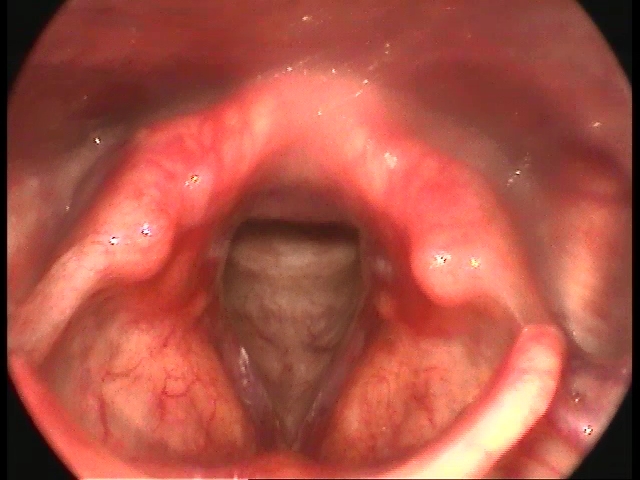
Introduction. E-cigarettes use among the population is rapidly increasing, driven by the widespread belief that vaping is safe for health and does not cause of addiction compared to traditional cigarettes.
Objective. The aim of the study was to analyze laryngeal pathology in vape users.
Materials and methods. This open-label, observational clinical study included 194 participants aged 19–66 years (108 men, 86 women) with 1–6 years of e-cigarette use and various laryngeal diseases: chronic catarrhal laryngitis (109), hyperplastic laryngitis (46), Reinke's edema (31), laryngeal polyp (7), and laryngeal cancer (1). The treatment algorithm was determined by the laryngeal disease. Patients were required to stop using e-cigarettes. Patients with Reinke's edema and laryngeal tumor underwent surgery.
Results. Treatment efficacy could only be assessed in 69.6 % of patients due to low compliance and reluctance to quit smoking. A good outcome was achieved in 98 patients (72.6 %), but only 29.6 % completely quit smoking.
Conclusions. A significant correlation was established between vaping and the severity of laryngeal hyperplasia (r >0.75, p <0.05), but it was not possible to determine the average daily number of e-cigarettes use episodes by patients. There is no clear correlation between smoking history and the severity of chronic laryngeal disease. Among smokers with chronic laryngeal disease, there is a high rate of noncompliance with follow-up care, which is due to reluctance to quit smoking and a lack of understanding of the negative impact of vaping on the respiratory tract.
SURGERY
Relevance. Ulcerative colitis remains a disease among abdominal surgical pathologies that requires further study and improvement of diagnostic and treatment methods. The current results of conservative and operative therapy cannot be considered satisfactory, since there are no clear criteria for predicting the course of the disease, and the issues of determining the optimal amount of surgical intervention remain unresolved. The lack of established prognostic markers complicates the choice of therapeutic tactics and affects the treatment outcomes of patients. The purpose of the study. To increase the effectiveness of treatment of patients with ulcerative colitis through the development of methods for predicting the clinical course of the disease and determining the optimal treatment strategy.
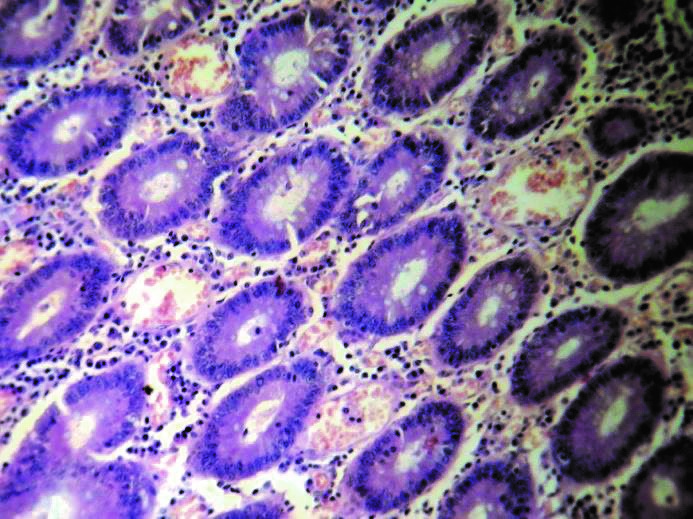
Materials and methods. The study included 144 patients with ulcerative colitis. Of these, 76 patients received conservative treatment, 68 patients underwent surgical treatment using various techniques: colon resection, coloproctectomy and colectomy. To assess the state of homeostasis, central hemodynamic parameters and variational heart rate monitoring data were analyzed. The qualitative characteristics of the patients' vital activity were determined using the SF-36 questionnaire. Morphological studies of the removed intestinal areas were performed in 24 patients to determine the concentration of free hydroxyproline in blood plasma.
Results. The main clinical manifestations of ulcerative colitis are diarrhea and blood in the stool, the intensity of which directly correlates with the extent and localization of the inflammatory process in the large intestine. Clinical severity is accompanied by the development of anemia, hypoproteinemia and intoxication. Hemodynamic disorders are characterized by an increase in systolic and minute heart volumes against the background of a decrease in peripheral vascular resistance. The analysis of vegetative homeostasis revealed a progressive increase in sympathetic activity as the disease worsened, which is confirmed by data from variational heart rate monitoring. Morphological examination of the resected tissue revealed signs of epithelial dysplasia, indicating significant structural changes in the mucous membrane. The quality of life of patients is determined by a complex of factors: the severity and duration of the course of the disease, the nature of the therapeutic measures used, demographic parameters (age, gender) and the topography of the pathological process. Based on a comprehensive analysis of the data obtained, a prognostic coefficient has been developed that makes it possible to assess the probability of success of conservative or surgical treatment in each specific case.
Conclusions. The incidence of ulcerative colitis is showing an increasing trend. The clinical spectrum of the disease is formed by diarrhea and melena, the severity of which is accompanied by a complex of disorders of the water-electrolyte balance, protein parameters and phenomena of systemic intoxication. Disorders of central hemodynamics are naturally combined with an increase in sympathetic activity, the degree of which correlates with the severity and duration of the inflammatory process. The quality of life in ulcerative colitis is primarily determined by the severity of the disease, its prevalence within the large intestine, and the chosen treatment method. Postoperative mortality is determined by the degree of progression of the pathological process and the severity of the clinical attack. When using logistic regression to predict indications for surgery, the most informative criteria are the patient's gender, duration of the disease, endoscopic indicators of inflammatory activity, and frequency of bowel movements.
PEDIATRIC SURGERY

Introduction. The Ponseti method is the gold standard for the treatment of congenital clubfoot. However, in some patients (those with late presentation, relapses after surgery, or syndromic forms), complete correction is not achieved.
Objective. To present a surgical treatment strategy for children with clubfoot in cases of incomplete correction after the Ponseti method.
Methods. From 2008 to 2026, between 70 and 100 children per year with clubfoot from other regions were treated at clinics in Yaroslavl. All patients initially underwent Ponseti casting (at least three casts). If reduction in the subtalar and Chopart joints was not achieved, surgical intervention was performed. The foot was divided into three segments (hindfoot, midfoot, forefoot) and corrected sequentially, ranging from tenotomies and soft tissue releases to osteotomies and arthrodesis. In cases of muscle imbalance, tendon transposition was added.
Results. Preoperative Ponseti casting, regardless of age and deformity severity, reduced the extent of surgical intervention and the amount of tissue transected compared to traditional approaches. In 98 % of patients with timely primary treatment, the deformity was fully corrected. In children with relapses and incomplete correction, the use of the Ponseti method as an initial step facilitated subsequent surgery and improved functional outcomes.
Conclusion. Initiating treatment with the Ponseti method, even in cases of incomplete correction, minimizes the surgical scope and helps achieve a neutral foot position while preserving maximum limb function. The proposed sequential approach (correction of the hindfoot, midfoot, and forefoot) is effective and safe.
PHARMACOLOGY, CLINICAL PHARMACOLOGY
Objective. To demonstrate the challenges of selecting antihypertensive therapy in a patient with resistant arterial hypertension (AH) complicated by acute kidney injury (AKI) and renal replacement therapy (RRT), and to justify the choice of drug combination based on dialyzability.
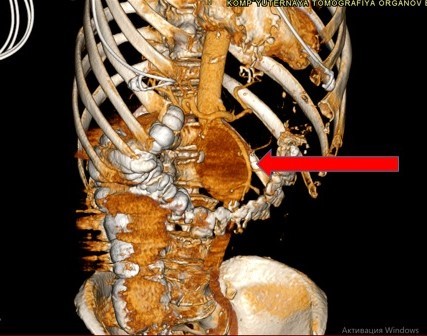
Clinical case description. A 66-year-old male patient was admitted for elective resection of a symptomatic suprarenal aortic aneurysm. In the preoperative period, AKI developed, requiring initiation of RRT. After surgical intervention (aneurysm resection with left renal artery grafting and balloon angioplasty of the superior mesenteric artery), the condition was complicated by stress-induced cardiomyopathy and pulmonary edema. AH became resistant. Antihypertensive drugs were selected considering pharmacokinetics and dialyzability. The final regimen (valsartan, carvedilol, modified-release nifedipine, torasemide) achieved target blood pressure (<130/80 mm Hg) and stabilized the patient's condition.
Conclusion. Management of resistant AH in patients with AKI and RRT requires an individualized approach based on the dialyzability of antihypertensive agents. The described combination may serve as an effective therapeutic option in similar clinical scenarios.
PEDIATRICS
Background. Postpartum depression affects 10–20 % of women in developed countries and up to 40 % in developing countries (according to the WHO), often remaining undiagnosed (up to 50 % of cases) due to stigmatization and lack of screening, leading to serious consequences for the mother, child, and family. In Russia, data is fragmented (13–19 %), but relevant due to demographic challenges and changes in maternity care, requiring research on risks and prevention.
Objective. To study the prevalence, clinical manifestations, and risk factors of postpartum depression in women in the Russian population in order to develop effective prevention strategies and early intervention.
Materials and methods. A cross-sectional study was conducted using questionnaires to collect data on the psychoemotional state of women in the postpartum period. The study was conducted from March to April 2024 in Yaroslavl, Russia, and involved 78 women aged 18 to 45 who had children under the age of three. SPSS Statistics 25.0 was used for statistical analysis.
Results. The prevalence of postpartum depression among 78 women was 48 % (higher than the global rate of 13–22 %), and only 13.5 % sought help. Key risks: emotional disorders (OR=2.8), lack of support (OR=4.63), stress (OR=1.27), problems with breastfeeding (OR=2.1), emergency C-section (OR=1.23). Protective factor: social support (β = –0.375); correlations: stress-depression (r = 0.61), child's temperament (r = 0.41).
Conclusions. The results highlight the need for a comprehensive approach to the prevention and treatment of postpartum depression, which should include both medical and psychosocial interventions. Special attention should be given to identifying women at risk during pregnancy and providing them with the necessary support in the postpartum period.
INFECTIOUS DISEASES
Relevance. Chronic hepatitis C (CHC) remains one of the global health problems, being the leading cause of cirrhosis, hepatocellular carcinoma, and the need for liver transplantation. The combination of CHC and obesity creates a synergistic negative effect, significantly worsening the response to treatment and the prognosis of the disease. In this regard, an in-depth study of the pathogenetic mechanisms underlying this relationship, particularly the role of genetic factors, is an extremely relevant area of modern hepatology.
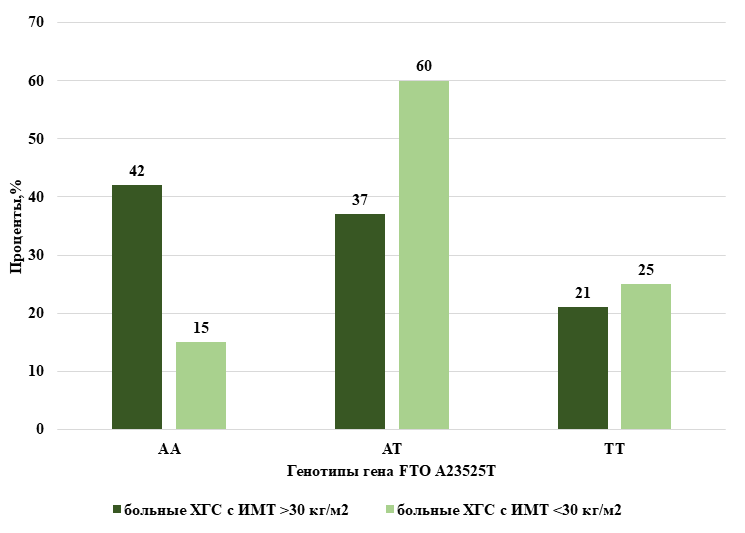
Objective. To study the effect of the rs9939609 polymorphism of the FTO A23525T gene on obesity in patients with chronic hepatitis C.
Materials and methods. The study was conducted at the Regional Infectious Diseases Clinical Hospital in Yaroslavl, where a sample of 240 patients aged 18–60 years was formed. As part of the study, all participants provided their medical histories and underwent anthropometric measurements (waist circumference and body mass index calculation). To verify chronic hepatitis C, we used ELISA to detect a spectrum of antibodies (a-cor, a-NS3, a-NS4, a-NS-5) in the blood serum, as well as PCR to detect hepatitis C virus RNA (HCV). The degree of hepatitis activity was assessed by the level of liver transaminases in the blood serum. Molecular genetic analysis, including the study of the rs9939609 polymorphism of the FTO gene (A23525T), was carried out in the clinical and diagnostic laboratory of the Institute of Pharmacy of the Federal State Budgetary Educational Institution of Higher Education «Yaroslavl State Medical University». Real-time PCR was used for genotyping on the «iCycler iQ5» (BioRad) amplifier with the «SNP-express-RV» reagent kit. The patients underwent liver elastometry using the FibroScan 502 device from Echosens, with interpretation of the METAVIR stage.
Results. According to the inclusion criteria, the patients were divided into groups: the first (main) group consisted of patients with CSC and obesity (124 patients), and the second (comparison) group consisted of patients with CSC without obesity (116 patients). Correlations were established between the FTO A23525T gene genotypes and obesity, as well as the possible impact on the severity of HCV infection and the stage of liver fibrosis.
Conclusion. In patients with HCV and obesity, there is a direct correlation between the body mass index and waist circumference. In patients with different FTO gene genotypes, there is a possible effect on the severity of hepatitis and the stage of liver fibrosis.
NEUROLOGY
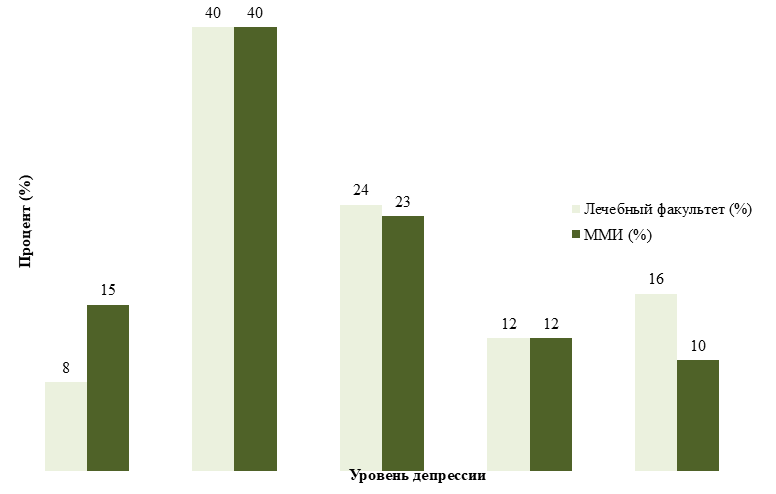
Objective. To compare the prevalence and severity of depressive symptoms among students of the Faculty of Medicine and the International Medical Institute.
Methods. A total of 110 students (50 from the Faculty of Medicine, 60 from the International Medical Institute) were examined. The Beck Depression Inventory was used. Quantitative and qualitative analyses of symptoms were performed, along with statistical analysis using Student’s t-test and calculation of confidence intervals.
Results. Moderate, severe, and profound forms of depression were identified in 52 % of students from the Faculty of Medicine and in 45 % of students from the International Medical Institute. The mean Beck scores were 11.2±4.5 and 10.4±4.5, respectively (p >0.05). The most common symptoms were fatigue, sleep disturbances, feelings of guilt, loss of interest in activities, and difficulty concentrating.
Conclusion. The findings indicate a high prevalence of depressive symptoms among medical students and justify the need to implement psychological support and prevention programs.
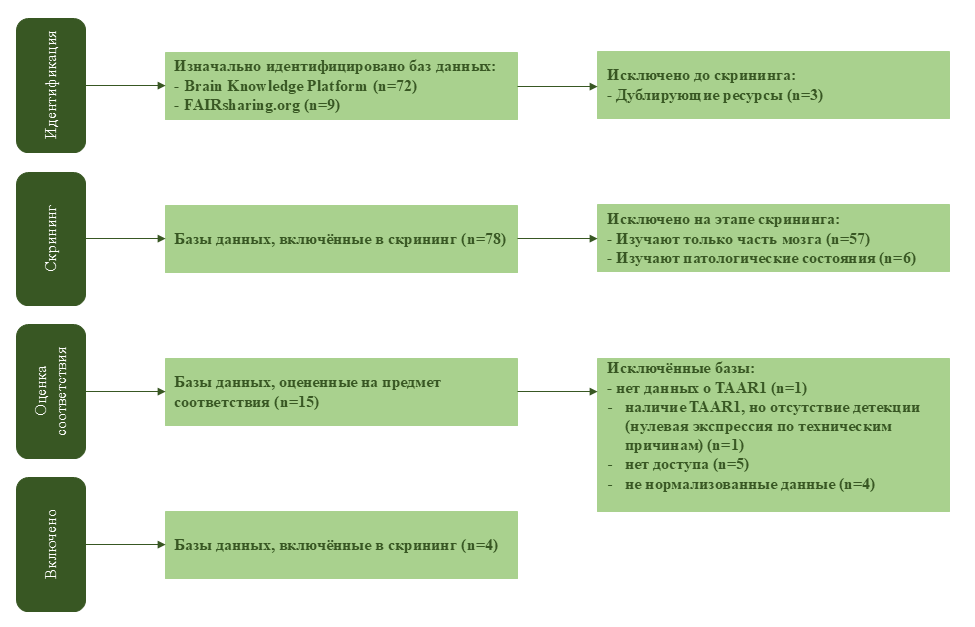
Relevance. Trace amine-associated receptor-1 (TAAR1) mediates signaling through a broad spectrum of agonists that function as neuromodulators in classical neurotransmitter systems and may also potentially exert a neuroprotective effect.
Objective. The aim of this study was to determine the expression pattern of TAAR1 in brain cells and tissues by analyzing publicly available gene expression databases.
Materials and methods. TAAR1 gene expression was analyzed using datasets from the Allen Institute for Brain Science (Human Brain Atlas Microarray, Allen Brain Cell Atlas, Brain Allen Developing Human Brain Atlas, and Whole Mouse Brain Transcriptomic Cell Type Atlas).
Results. Analysis of public transcriptomic databases revealed TAAR1 expression in the human cerebral cortex, amygdala, basal ganglia, hippocampus, and thalamus. Marked differences between human and mouse data indicate probable interspecies differences in TAAR1 expression.
Conclusion. TAAR1 exhibits a heterogeneous and predominantly low-grade distribution within the central nervous system, highlighting the need for modern single-nucleus/single-cell sequencing methods and the development of in vivo approaches to receptor imaging.
PHYSICAL AND REHABILITATION MEDICINE
Introduction. Immersive virtual reality (IVR) is considered a promising tool for medical rehabilitation, but data on its clinical efficacy across different conditions need to be systematized.
Objective. To evaluate the effectiveness of IVR as a therapeutic method for motor function recovery and pain management in adult patients with neurological disorders (stroke, Parkinson's disease), amputations, and fibromyalgia.
Methods. A literature search was performed in PubMed, Cochrane Library, and Scopus databases from 2018 to March 1, 2025. Studies involving adults after stroke, with Parkinson's disease, fibromyalgia, or limb amputation that used IVR-based protocols were included. Changes in motor functions, pain syndrome, neuroplasticity, and therapy adherence were analyzed.
Results. IVR significantly improves strength, dexterity, range of motion, and coordination in post-stroke and Parkinson's disease patients, promotes neuroplasticity, and reduces pain. In fibromyalgia, IVR decreases kinesiophobia and pain intensity; in amputees, it improves prosthetic control and muscle strength. IVR sessions are perceived as more enjoyable and motivating compared to conventional therapy. Main limitations: small sample sizes, heterogeneous protocols, need for a trained specialist, and insufficient adaptation for patients with severe impairments.
Conclusion. IVR is a safe and effective rehabilitation method, but large-scale randomized trials are required to standardize protocols, assess long-term outcomes, and expand indications.
DIGITAL MEDICINE
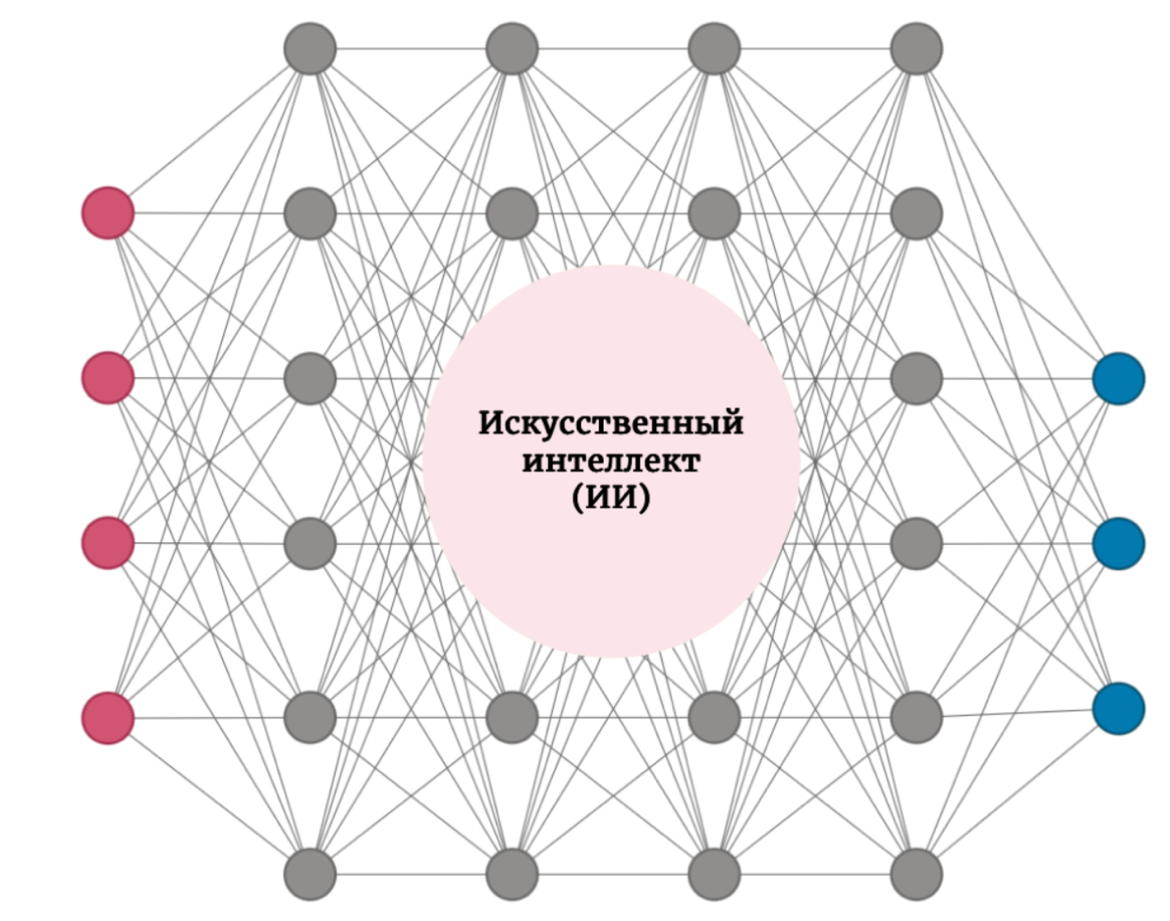
Background. Digital technologies are transforming the pharmaceutical industry, changing both manufacturing processes and the very approach to the development and use of medicines. Artificial intelligence, machine learning technologies, and deep data analysis algorithms play a key role in the digitalization of pharmacy.
Methods. In this literature review, we used systematic and structural analysis; an interdisciplinary approach combining methods of content analysis of scientific literature; study of regulatory documentation; and case-oriented modeling.
Results. It has been established that digital technologies have a significant impact on key stages of the drug life cycle in the pharmaceutical industry. However, large-scale digitalization is currently hampered by a number of barriers, which are presented in our work. We propose ways to overcome these limitations (introduction of hybrid architectures, development of international repositories of anonymized data, integration of digital modules into specialist training programs).
Conclusion. Digitalization is beginning to shape new principles for the functioning of the pharmaceutical industry. However, comprehensive measures are needed to make a full transition from isolated achievements to sustainable digital transformation.
PHARMACY BUSINESS ORGANIZATION
Relevance. Despite the fact that the Russian Federation has an effective system for the production and sale of medicines, there is still no system for collecting and disposing of unused medicines that are stored in people's home medicine cabinets. Unused medicines end up in the environment along with household waste. Due to the significant risks of harming the environment and public health, it is crucial for the population to properly dispose of unused medicines.
Objective. Situational analysis of the organization's disposal of unused medicines.
Materials and methods. The study analyzed the regulatory and legal documents governing the destruction of medicines and the activities of pharmacists; conducted a survey of consumers on the disposal of unused medicines; and analyzed the activities of organizations involved in waste disposal. The study used content analysis, questionnaires, observation, generalization, structural, comparative, and mathematical-statistical analysis as research methods.
Results. An analysis of regulatory and legal documents showed that there is no regulation of the disposal of unused medicines by the population. A survey of consumers allowed us to establish the population's approaches to the disposal of unused medicines, identify their main information needs, and identify organizational issues in this area. Consumers expressed their willingness to properly dispose of medicines, provided that special collection points for these wastes are established. However, there is no opportunity for the population to independently transfer unused medicines to recycling organizations.
Conclusion. A comprehensive approach to solving the problem of the disposal of unusable medicines, which includes the creation of specialized waste collection points, active consumer involvement through information campaigns, and legislative measures, will contribute to improving the environmental situation and protecting public health.

Editorial and publishing address:
LLC Publishing House OKI
115522, Moscow, st. Moskvorechye, 4, building 5, apt. 129
General Director Elena Afanasyeva
Tel. + 7 (916) 986-04-65; Email: eva88@list.ru













.png)

